* Pray
* Shakespearean Tragedy Card Quiz
* CWP (or evidence) collection
* Note the new resources on Focus. M.C. tests and green sheet awesomeness!
M.C. Schedule
Lear: Done
Austen: Done
1982: Done
2009: Done
2004: Done
2008: Friday
1999: Weekend homework
1991: Monday
1994: We will see; perhaps Tuesday Night
2006: Extra Unassigned Online with key now available (46 questions).
* M.C. 2008
* You may turn in corrections for 2004 on (but not after) Monday
* Poetic Rhythm and Meter Lesson: Ch. 12 of Perrine's (Poetry Section), pg. 915.
Scanning Review Slideshow (.ppt)
* ICE work (green sheets)
HW: Practice M.C. Test on Focus. Answers are also available. Score it when you are done. Give me your score on Monday. You will get 100% for doing the assignment. You will get extra credit for doing test corrections on this one.
Showing posts with label Perrine's Poetry. Show all posts
Showing posts with label Perrine's Poetry. Show all posts

Thursday, 4/5: M.C.
* Pray
* M.C.
* Collect J39 (sorry, my numbers were off; please edit your numbers)
HW: Finish or nearly finish TTC
* M.C.
* Collect J39 (sorry, my numbers were off; please edit your numbers)
HW: Finish or nearly finish TTC
Wednesday, 4/4: Writing
* Pray
* Turn in your journal
* Review grammar exercise (colon)
Important Note:
"MLA and Chicago style use a lowercase letter to begin an independent clause following a colon; APA style uses a capital letter" (465).
* Perrine's ch. 12
- Read ch. 12
- Choose any poem of to answer questions for (of four or more questions)
HW: J39
* Turn in your journal
* Review grammar exercise (colon)
Important Note:
"MLA and Chicago style use a lowercase letter to begin an independent clause following a colon; APA style uses a capital letter" (465).
* Perrine's ch. 12
- Read ch. 12
- Choose any poem of to answer questions for (of four or more questions)
HW: J39


Tuesday, 3/27: You Remember the Rhymes
* Pray
* Collect J37
* Perrine's ch. 11. Last week we considered Spoken Word Poetry. As time passes, we have more varieties, though they have recognizable strains of the parent form. The rhyme, repetition, and forceful, aggressive performance are key aspects of Listener's poetry music. Once again, poetry, and rhymed poetry particularly, is far from dead. Listener and G.M. Hopkins (Perrine's pg. 905) pair well.
* Collect J37
* Perrine's ch. 11. Last week we considered Spoken Word Poetry. As time passes, we have more varieties, though they have recognizable strains of the parent form. The rhyme, repetition, and forceful, aggressive performance are key aspects of Listener's poetry music. Once again, poetry, and rhymed poetry particularly, is far from dead. Listener and G.M. Hopkins (Perrine's pg. 905) pair well.
Rhyming's Fine, Evangeline
* Pray
* Perrine's Ch. 11
* Rhyme is not dead, music shows that well enough.
In fact, it's even part of some basic slang language:
Cockney Rhyming Slang
- The basics from NPR news in London.
Examples from a London site:
--King James vs. Cockney?
Or consider spoken word poetry
"Dear Father"
* For Block Day: Grammar: Comma. Read 32f-j. Do 32-4, letters and numbers.
HW: Read
* Perrine's Ch. 11
* Rhyme is not dead, music shows that well enough.
In fact, it's even part of some basic slang language:
Cockney Rhyming Slang
- The basics from NPR news in London.
Examples from a London site:
| English | Rhymes with | Cockney |
|---|---|---|
| Feet | Plates of meat | Plates |
| Teeth | Hampstead Heath | Hampsteads |
| Legs | Scotch eggs | Scotches |
| Eyes | Mince pies | Minces |
| Arms | Chalk Farms | Chalk Farms |
| Hair | Barnet Fair | Barnet |
| Head | Loaf of bread | Loaf |
| Face | Boat race | Boat race |
| Mouth | North and south | North and south |
--King James vs. Cockney?
Or consider spoken word poetry
"Dear Father"
* For Block Day: Grammar: Comma. Read 32f-j. Do 32-4, letters and numbers.
HW: Read
Thursday, 3/8
* Pray
* Grammar
* Jane Austen Card (this will have better resolution than the pictures below)
* Perrine's Ch. 11 (Poetry)
* Video
HW: Begin A Tale of Two Cities (March novel; Crime and Punishment will be the April novel).
* Grammar
* Jane Austen Card (this will have better resolution than the pictures below)
* Perrine's Ch. 11 (Poetry)
* Video
HW: Begin A Tale of Two Cities (March novel; Crime and Punishment will be the April novel).
Wednesday, 3/6: Comma Coma
* Pray
* Wish Mrs. Roth a happy birthday.
* Grammar: Comma Coma
-Read: Punctuation -> Comma -> 32d, 32e... (see the link on the right side of the blog below the labels...Bedford)
-Do ex. 32-3, pp. 382-383; handwrite or work from a paper book.
* Continue Reading Perrine's Poetry ch. 11. As ever, take notes on anything in bold.
HW: Contest
* Wish Mrs. Roth a happy birthday.
* Grammar: Comma Coma
-Read: Punctuation -> Comma -> 32d, 32e... (see the link on the right side of the blog below the labels...Bedford)
-Do ex. 32-3, pp. 382-383; handwrite or work from a paper book.
* Continue Reading Perrine's Poetry ch. 11. As ever, take notes on anything in bold.
HW: Contest
Tuesday: 3/5
* Pray
* Perrine's ch. 11
- Notes
- Working through the poems together
HW: Extend your poem memorization; contest
* Perrine's ch. 11
- Notes
- Working through the poems together
HW: Extend your poem memorization; contest
Block Day, Week 29: Perrine's, etc.
* Pray
* Collect CWP

* Collect CWP
- Check Your Head
- If you typed...submit to turnitin.com
* Perrine's Ch. 11
- Reading, notes, review
* Bleakness
HW: None
* Perrine's Ch. 11
- Reading, notes, review
* Bleakness
HW: None
Wednesday 2/29: CWP
* Pray
* Perrine's Review
* CWP
Remember: If you are handwriting your CWP, single space. If you are typing your CWP, double space. If you don't do a CWP, your grade is lost in space.
* Submit your CWP to Turnitin.com through Focus
HW: Finish your CWP; Turnitin.com
* Perrine's Review
* CWP
Remember: If you are handwriting your CWP, single space. If you are typing your CWP, double space. If you don't do a CWP, your grade is lost in space.
* Submit your CWP to Turnitin.com through Focus
HW: Finish your CWP; Turnitin.com
Tuesday, 2/21: Austen
* Opening Assignment:
Review this Family Diagram
* Austen
* Deric (p6): Please see me about an electronic device question.
HW: Leithart
Review this Family Diagram

* Austen
* Deric (p6): Please see me about an electronic device question.
HW: Leithart
Perfect Timing for our CWP!
The 19th Annual Santa Cruz County High School Poetry Contest.
- Up to 3 poems.
- See the website for the title and naming format (it's very specific and important to keep the judging somewhat objective).
- You will hear back in April and will get extra credit if you win or are published in the book.
- Be sure to edit your work multiple times.
- Up to 3 poems.
- See the website for the title and naming format (it's very specific and important to keep the judging somewhat objective).
- You will hear back in April and will get extra credit if you win or are published in the book.
- Be sure to edit your work multiple times.
Love is Strong as Death
The Grammy awards are this Sunday, and I won't watch them; however, I'll venture a guess. There are only four categories, but I would be surprised if Adele does not walk away with something.
What does she sing about? Something fresh as a wound; something as old as the world: Love in a fallen world.
Consider Song of Solomon 8:6:
[F]or love is strong as death,
jealousy is cruel as the grave;
the coals thereof are coals of fire
which hath a most vehement flame.
Compare the fire to:
Adele: "Fire to the Rain"
Compare the death to:
Perry: "If I Die Young"
Those are not assignments, just for thought.
What does she sing about? Something fresh as a wound; something as old as the world: Love in a fallen world.
Consider Song of Solomon 8:6:
[F]or love is strong as death,
jealousy is cruel as the grave;
the coals thereof are coals of fire
which hath a most vehement flame.
Compare the fire to:
Adele: "Fire to the Rain"
Compare the death to:
Perry: "If I Die Young"
Those are not assignments, just for thought.
Monday, 1/30: Reading
* Pray (for babies)
* Journal 32 Reviewed
* This week we will have a M.C. practice test.
* Austen questions will now be oral. You do not need to fill in answers any longer; simply keep up with the reading and look over the guide for what I will be asking.
J32
I. Notes and Terms (don't forget to provide a literary example or sentence for each term defined)
* allusion
* third-person limited point of view
* stream of consciousness
* first-person point of view
* objective (or dramatic) point of view
* epistolary novel (esp. as treats point of view; not in Perrine's or Turco)
Below, see Turco
* logical argument
* a priori or deductive reasoning
* a posteriori or inductive reasoning
* general principle
* premise (major and minor)
* conclusion
* categorical syllogism
* taxonomy
* differentia
II. Story, ch. 5: Point of View: Example story: "The Swimmer" by John Cheever, pg. 607, on Focus.
Response question: In a well-developed paragraph, examine the role of the point of view in supporting the central idea of the story.
III. Poetry, ch. 8: Allusion. I will list the poems and the questions. This will tighten our scope and make your work clearer and easier.
Get the Poetry Foundation app for your iPad, please. The poems are scattered in Perrine's (use the appendix--back of the book--to locate by title or author).
Review and Remember: "Dulce et Decorum Est" by Wilfred Owen, "Terence, this is stupid stuff" by A.E. Houseman, "Never Again Would Bird's Song be the Same" by Robert Frost
New to consider: "The Destruction of Sennarcherib" by Lord Byron, "Journey of the Magi" by T.S. Eliot, "Nothing Gold can Stay" by Robert Frost, "Kubla Kahn" by Samuel Taylor Coleridge, "Sailing to Byzantium" by William Butler Yeats
Optional: "The Abortion" by Anne Sexton
Choose two poems to answer this one question:
1. In a well-developed paragraph, explain how one allusion significantly strengthens the poem in terms of its power (density, intensity), imagery, and central meaning.
IV. Austen: Read 10 chapters (through ch. 35)
HW: Work on J32
* Journal 32 Reviewed
* This week we will have a M.C. practice test.
* Austen questions will now be oral. You do not need to fill in answers any longer; simply keep up with the reading and look over the guide for what I will be asking.
J32
I. Notes and Terms (don't forget to provide a literary example or sentence for each term defined)
* allusion
* third-person limited point of view
* stream of consciousness
* first-person point of view
* objective (or dramatic) point of view
* epistolary novel (esp. as treats point of view; not in Perrine's or Turco)
Below, see Turco
* logical argument
* a priori or deductive reasoning
* a posteriori or inductive reasoning
* general principle
* premise (major and minor)
* conclusion
* categorical syllogism
* taxonomy
* differentia
II. Story, ch. 5: Point of View: Example story: "The Swimmer" by John Cheever, pg. 607, on Focus.
Response question: In a well-developed paragraph, examine the role of the point of view in supporting the central idea of the story.
III. Poetry, ch. 8: Allusion. I will list the poems and the questions. This will tighten our scope and make your work clearer and easier.
Get the Poetry Foundation app for your iPad, please. The poems are scattered in Perrine's (use the appendix--back of the book--to locate by title or author).
Review and Remember: "Dulce et Decorum Est" by Wilfred Owen, "Terence, this is stupid stuff" by A.E. Houseman, "Never Again Would Bird's Song be the Same" by Robert Frost
New to consider: "The Destruction of Sennarcherib" by Lord Byron, "Journey of the Magi" by T.S. Eliot, "Nothing Gold can Stay" by Robert Frost, "Kubla Kahn" by Samuel Taylor Coleridge, "Sailing to Byzantium" by William Butler Yeats
Optional: "The Abortion" by Anne Sexton
Choose two poems to answer this one question:
1. In a well-developed paragraph, explain how one allusion significantly strengthens the poem in terms of its power (density, intensity), imagery, and central meaning.
IV. Austen: Read 10 chapters (through ch. 35)
HW: Work on J32
Wednesday 1/18: Writing, Example Essay: Mackenzie Jackson's "Hymn to God My God, in My Sickness"
Mackenzie Jackson
Mr. Schwager
English IV AP Per. 5
8 December 2005
Prompt: Choose an literary term and apply it to a Perrine poem of your choice (3-4 pages).
Victorious in Death: Biblical Allusion in “Hymn to God My God, in My Sickness”
A writer references Achilles’ heel, Madame DeFarge, the Harpies, Job, June Cleaver, the storming of Troy, and Ebenezer Scrooge; these are some of the most famous allusions in life and literature. With each implied reference to such a name or an incident, there is a universal recognition of the connotations and histories associated with such allusions. Because of its ability to add depth to and enrich meaning in both poetry and literature, allusion has become one of the most widely used and debated literary elements. John Donne, the greatest metaphysical poet in history, was a prolific user of allusion. In his many attempts to expand on the themes of love, death, and the afterlife, Donne makes use of powerful allusions, especially those he had become familiar with in his career as a priest, those of a biblical nature. In his religious poem, “Hymn to God My God, in My Sickness”, written when Donne was very ill and thought to be near death, he makes use of biblical allusions such as the relationship between Adam and Christ as well as to Christ’s death and resurrection in a successful attempt to enrich his themes of earthly struggle and heavenly victory. These allusions in a poem concerning a reflection on life and a preparation for death expose Donne’s life struggle between humanity and divinity and the ultimate victory of the divine.
Tuesday, 1/17/12: Grammar, Perrine, etc.
* Pray
This week: Quiz on our block day covering Q2 outside reading and terms (Perrine's poetry --ch. 6; fiction--ch. 3). We will also have a single M.C. test section. Tea party and Bleak House follow.
* Ch. 4: "Valediction Forbidding Mourning"

This week: Quiz on our block day covering Q2 outside reading and terms (Perrine's poetry --ch. 6; fiction--ch. 3). We will also have a single M.C. test section. Tea party and Bleak House follow.
* Ch. 4: "Valediction Forbidding Mourning"
Wednesday, Jan. 11: How is the life of the mind and soul a life of metaphor?
* Pray
* Review Perrine's Story
Ch. 1 What is fiction?
Foundation: God loves stories and is a story teller; we are made in his image; we love stories and are story tellers. Consider his drama.
Literary fiction and commercial fiction: think of them as extremes rather than simply two categories.
Pot boilers, by nature, have a standard plot, but are not concerned with character depth. Their artistic unity is essentially the plot but considers little else.
Ch. 2 Plot
Plot line: Aristotle focused on the plot, which is reasonable. Some only consider the plot, though, and that is a weakness.
Review: protagonist, antagonist, mystery, dilemma, happy ending, deus ex machina, chance, coincidence, unhappy ending, indeterminate ending
Artistic unity: Aristotle (Poetics) speaks of the unities of time, action, and place in drama. In prose fiction, we want to see all things working together toward a common artistic end...as, in Christ, all things do. Nothing is extraneous. Not that there won't be minor characters, etc., just that it is all necessary.
Perrine's Poetry ch. 5: Metaphor, etc.
Review: Metaphor, Personification, Apostrophe
New:
Synecdoche: part for whole: Many hands make light work.
Metonymy: something closely related...for the thing itself: The White House (government)
All communication is a kind of metaphorical art: Robert Frost's 1931 Amherst College Speech.
HW: J29, Two Poems of Your Choice from Ch. 5
* Review Perrine's Story
Ch. 1 What is fiction?
Foundation: God loves stories and is a story teller; we are made in his image; we love stories and are story tellers. Consider his drama.
Literary fiction and commercial fiction: think of them as extremes rather than simply two categories.
Pot boilers, by nature, have a standard plot, but are not concerned with character depth. Their artistic unity is essentially the plot but considers little else.
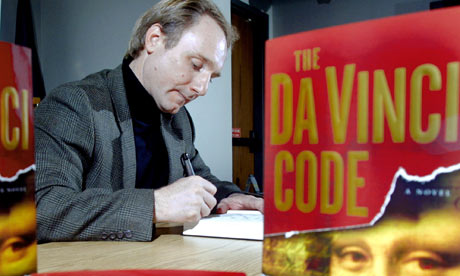 |
| Some cite Dan Brown's The Da Vinci Code as the worst (most baldly commercial) novel of the past decade: http://www.guardian.co.uk/books/booksblog/2009/dec/08/worst-books-of-the-decade. |
Ch. 2 Plot
Plot line: Aristotle focused on the plot, which is reasonable. Some only consider the plot, though, and that is a weakness.
Review: protagonist, antagonist, mystery, dilemma, happy ending, deus ex machina, chance, coincidence, unhappy ending, indeterminate ending
Artistic unity: Aristotle (Poetics) speaks of the unities of time, action, and place in drama. In prose fiction, we want to see all things working together toward a common artistic end...as, in Christ, all things do. Nothing is extraneous. Not that there won't be minor characters, etc., just that it is all necessary.
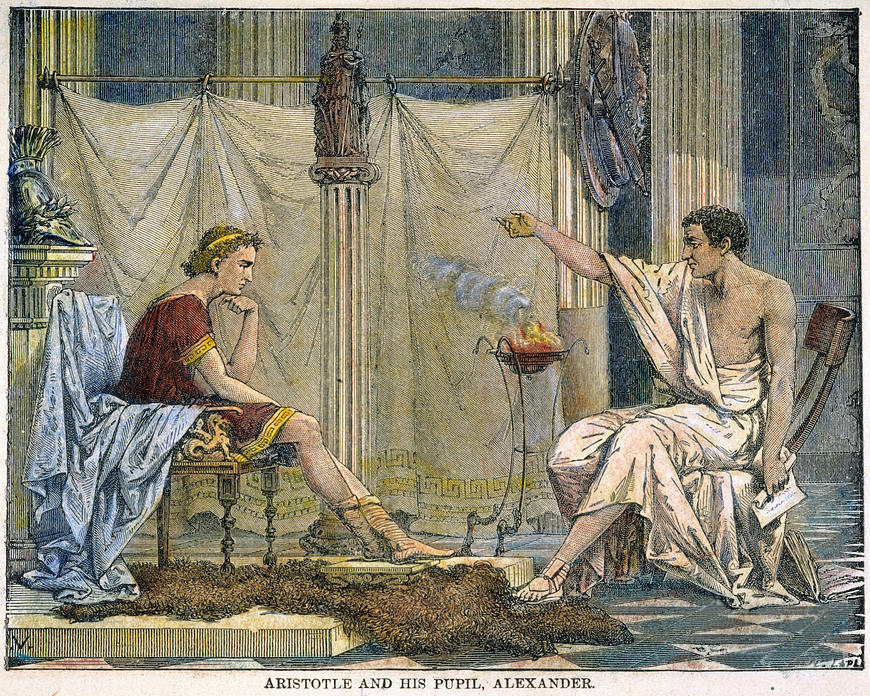 | |
| Alexander and Aristotle |
Review: Metaphor, Personification, Apostrophe
New:
Synecdoche: part for whole: Many hands make light work.
Metonymy: something closely related...for the thing itself: The White House (government)
All communication is a kind of metaphorical art: Robert Frost's 1931 Amherst College Speech.
HW: J29, Two Poems of Your Choice from Ch. 5
Subscribe to:
Posts (Atom)