Showing posts with label Perrine's Fiction. Show all posts

Monday, 2/6/12: Reading

* Pray

* Sign up if you wish a tea party this week.

* This Week Block: ICE #2; Next Week Block: Terms Quiz,

* Drumroll...(many of) the cards are finally uploaded into the blog. If you hit the "Card" label, you will see them. Time to update your cards. Please be sure you have cards for:

Lewis
Beowulf
Chaucer
Dante, Pearl, or Gawain
Lear
Tempest
Drama of Your Choice

Next card: Poet of your choice: Biographical information; poetic style, elements, and themes. Memorize 20 or more lines of verse. Each line should be roughly 10 syllables. If there are fewer syllables per line on average, then you must increase your line count accourdingly. Due next block day. I will quiz you on 10 lines next week.

8 cards total so far

Memorization: 50 or more words per card (except the poet; that is by line)

Please print out your cards (even if you have electronic versions).
I will be checking all cards printed (sans Austen), not this week but next.

* Extra Credit: If I use your work for the blog in any way, I will be awarding your extra credit.

* Review J33

1. Notes (Story ch. 6; Poetry ch. 9) and Terms:

* symbol
* allegory
* fantasy
* total meaning
* prose meaning
* sprung rhythm

Turco on argument
* hypothetical syllogism
* disjunctive syllogism
* enthymeme (EN-thuh-meem)
* tautology
* adage
* empiricism
* textual support
* validity
* artistic proofs (list and describe)
* inartistic proofs (list and describe)

2. Story: Perrine's ch. 6 (pg. 291 ff): Read "Young Goodman Brown" (pg. 316 ff) by Nathaniel Hawthorne. Respond in one, well-developed paragraph: Explain the allegory of this story (there is more than one possibility; you choose one and go with it). Examine at least fifteen significant details that support your interpretaiton.

3. Poetry: Perrine's ch. 9 (pp. 862-878): Meaning and Idea. This chapter is important to read in its entirety and in the order of the poems presented. Notice how the poems form sets of two for comparison. Your assignment is to answer the questions for the last two poems of the chapter (by G.M. Hopkins).

4. Novel: Austen: Ch. 36-45 (Vol III, ch. 3).

Jane Austen's humble writing desk.  I remember hearing that she forbade others from oiling the hinges on a certain door so that she would know when people were nearing and could quietly cover or remove her work.  

HW: Begin Journal 33

Monday, 1/30: Reading

* Pray (for babies)

* Journal 32 Reviewed

* This week we will have a M.C. practice test.

* Austen questions will now be oral. You do not need to fill in answers any longer; simply keep up with the reading and look over the guide for what I will be asking.

J32

I.  Notes and Terms (don't forget to provide a literary example or sentence for each term defined)
* allusion
* third-person limited point of view
* stream of consciousness
* first-person point of view  
* objective (or dramatic) point of view
* epistolary novel (esp. as treats point of view; not in Perrine's or Turco)

Below, see Turco
* logical argument
* a priori or deductive reasoning
* a posteriori or inductive reasoning
* general principle
* premise (major and minor)
* conclusion
* categorical syllogism
* taxonomy
* differentia


II. Story, ch. 5: Point of View: Example story: "The Swimmer" by John Cheever, pg. 607, on Focus.
Response question: In a well-developed paragraph, examine the role of the point of view in supporting the central idea of the story.

III. Poetry, ch. 8: Allusion. I will list the poems and the questions. This will tighten our scope and make your work clearer and easier.

Get the Poetry Foundation app for your iPad, please. The poems are scattered in Perrine's (use the appendix--back of the book--to locate by title or author).

Review and Remember: "Dulce et Decorum Est" by Wilfred Owen, "Terence, this is stupid stuff" by A.E. Houseman, "Never Again Would Bird's Song be the Same" by Robert Frost

New to consider: "The Destruction of Sennarcherib" by Lord Byron, "Journey of the Magi" by T.S. Eliot, "Nothing Gold can Stay" by Robert Frost, "Kubla Kahn" by Samuel Taylor Coleridge, "Sailing to Byzantium" by William Butler Yeats

Optional: "The Abortion" by Anne Sexton

Choose two poems to answer this one question:
1. In a well-developed paragraph, explain how one allusion significantly strengthens the poem in terms of its power (density, intensity), imagery, and central meaning.

IV.  Austen: Read 10 chapters (through ch. 35)

HW: Work on J32

Tuesday, 1/17/12: Grammar, Perrine, etc.

* Pray

This week: Quiz on our block day covering Q2 outside reading and terms (Perrine's poetry --ch. 6; fiction--ch. 3). We will also have a single M.C. test section. Tea party and Bleak House follow.

* Ch. 4: "Valediction Forbidding Mourning"


Grammar: Semicolon.
Read 34, 34a, 34b, 34c, and 34d. Do ex. 34-1 (all letters and numbers)

Wednesday, Jan. 11: How is the life of the mind and soul a life of metaphor?

* Pray
* Review Perrine's Story
Ch. 1 What is fiction?
Foundation: God loves stories and is a story teller; we are made in his image; we love stories and are story tellers.  Consider his drama. 
Literary fiction and commercial fiction: think of them as extremes rather than simply two categories.
Pot boilers, by nature, have a standard plot, but are not concerned with character depth.  Their artistic unity is essentially the plot but considers little else. 


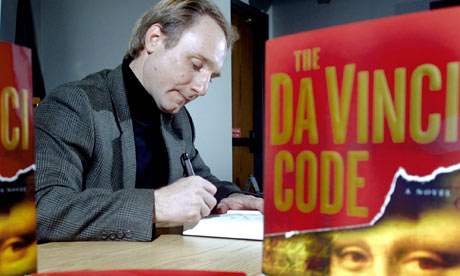
Some cite Dan Brown's The Da Vinci Code as the worst (most baldly commercial) novel of the past decade: http://www.guardian.co.uk/books/booksblog/2009/dec/08/worst-books-of-the-decade.


Ch. 2 Plot
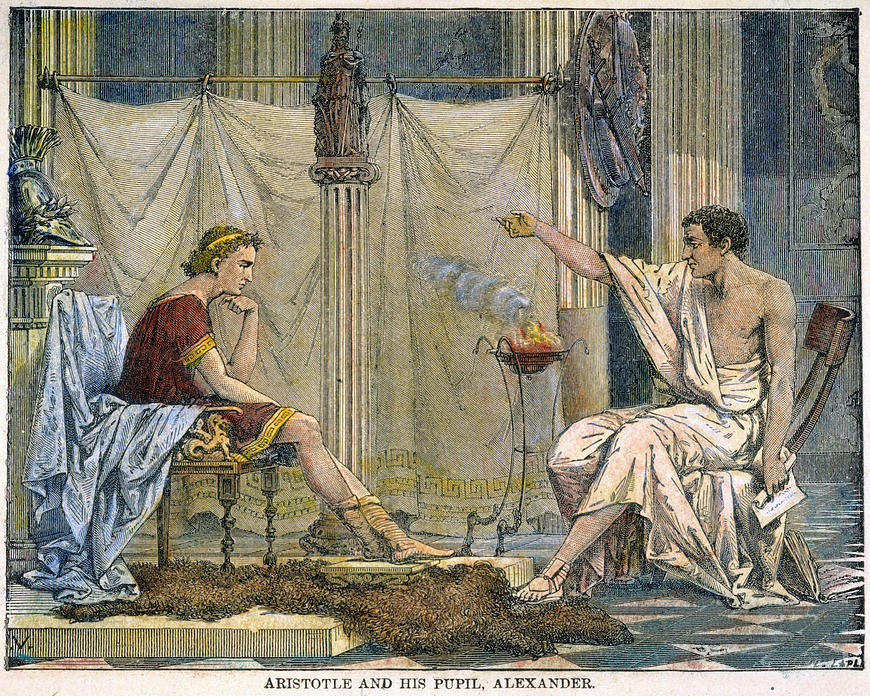
Plot line: Aristotle focused on the plot, which is reasonable.  Some only consider the plot, though, and that is a weakness. 
Review: protagonist, antagonist, mystery, dilemma, happy ending, deus ex machina, chance, coincidence, unhappy ending, indeterminate ending
Artistic unity: Aristotle (Poetics) speaks of the unities of time, action, and place in drama.  In prose fiction, we want to see all things working together toward a common artistic end...as, in Christ, all things do.  Nothing is extraneous.  Not that there won't be minor characters, etc., just that it is all necessary.  
Alexander and Aristotle
Perrine's Poetry ch. 5: Metaphor, etc. 
Review: Metaphor, Personification, Apostrophe
New:
Synecdoche: part for whole: Many hands make light work.  
Metonymy: something closely related...for the thing itself: The White House (government)


All communication is a kind of metaphorical art: Robert Frost's 1931 Amherst College Speech.  
HW: J29, Two Poems of Your Choice from Ch. 5 

Tuesday, 12/10: "The Destructors"; C & P

* Ch. 2 Notes

* Discuss "The Destructors"  (Review J28)

* Read Crime and Punishment


HW: Read Crime and Punishment

Monday, 12/5: Begin Fiction

* Pray

* Outside Reading: Crime and Punishment by Fyodor Dostoevsky

* Perrine's Story Ch. 2: "The Destructors"pg. 115 and ff. (see Focus for .pdf)

J28
1.  Who is the protagonist and antagonist in this story?
2.  What is Blackie's motivation? Trevor's motivation?
3.  Where would you locate the climax?  Why? 
4.  Trevor burns the bills individually.  Why?  What kind of philosophy is he acting from?  What does the setting have to do with this?

p1: 11:43
p3: 2:08
p6:

Block Day, Week 21

 * Pray

* Finish Denotation and Connotation.  Discuss imagery.  Review ch. 4.


Gerard Manley Hopkins

* Check J27

* There is a bleakness in your future!

HW: J28